Introduction: More Than Just Mochi
When many people think of Japanese sweets, “mochi” is often the first word that comes to mind. While delicious and incredibly versatile, mochi is just one small piece of a much larger, exquisite puzzle. The world of Wagashi encompasses a stunning array of confections, each with its own unique history, ingredients, and preparation methods.
In this deep dive, we’ll go beyond mochi and introduce you to the diverse and fascinating types of Wagashi that grace traditional Japanese tea ceremonies, festivals, and everyday life. Get ready to expand your sweet horizons!
Categorizing the Confections: How Wagashi Are Classified
Wagashi are traditionally categorized based on their moisture content, which dictates their shelf life and typical use:
- Namagashi (生菓子 – Fresh Confections): These are the most elaborate and artistic Wagashi, with a moisture content of 30% or more. They are meant to be enjoyed fresh, often on the same day they are made, and are commonly served at tea ceremonies. Nerikiri is a prime example.
- Han-Namagashi (半生菓子 – Semi-Fresh Confections): With a moisture content between 10% and 30%, these have a slightly longer shelf life than namagashi. They include items like monaka (wafer cakes) and some jellied sweets.
- Higashi (干菓子 – Dry Confections): These Wagashi have less than 10% moisture, giving them a much longer shelf life. They are often made from sugar and rice flour, pressed into delicate molds. Rakugan is a classic higashi.
Exploring the Diverse Types of Wagashi
Let’s explore some of the most prominent types of Wagashi, moving beyond just the familiar mochi:
1. Mochi-based Wagashi
As mentioned, mochi is a fundamental ingredient. It’s a soft, chewy rice cake made from glutinous rice.
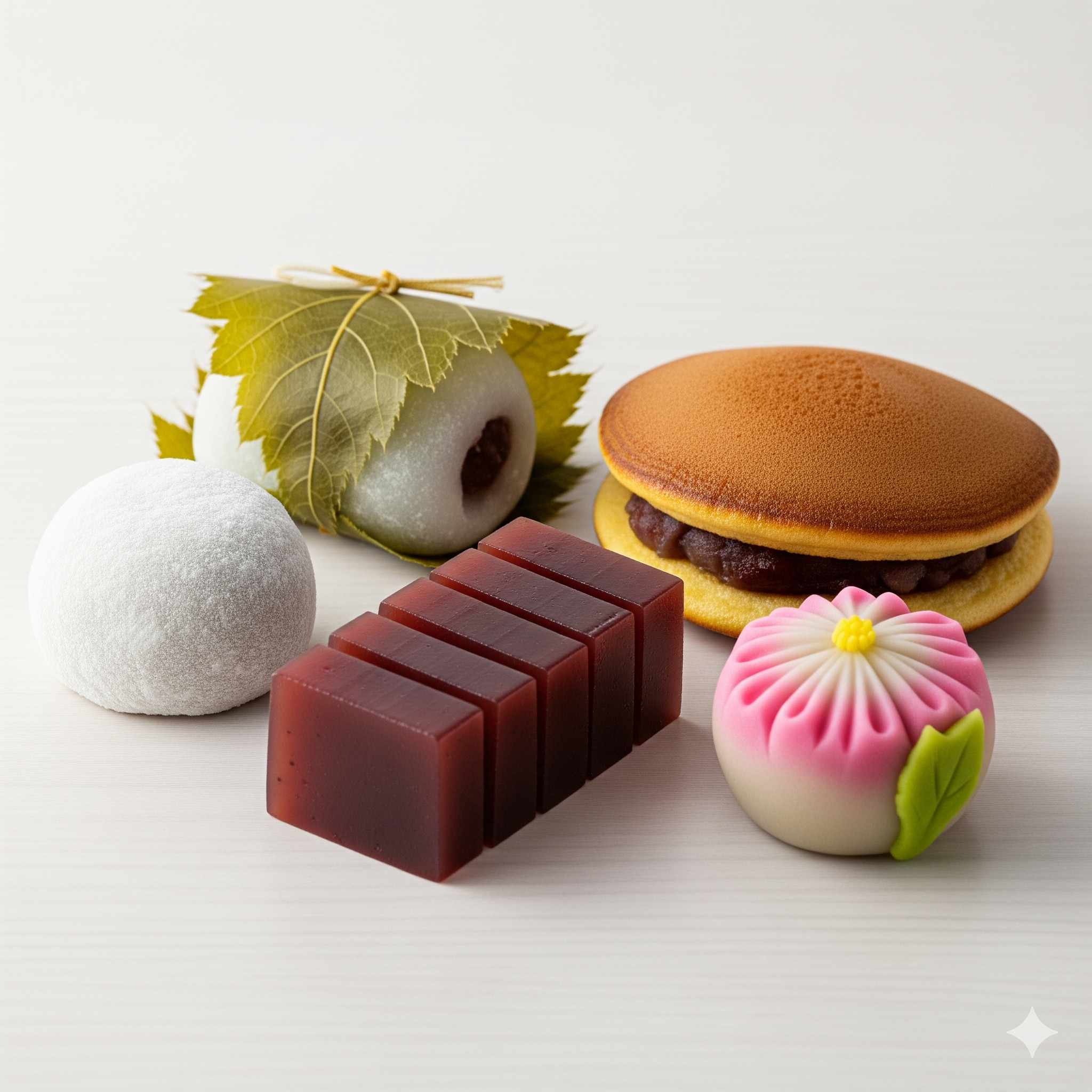
- Daifuku (大福): Soft mochi filled with anko (sweet red bean paste). Varieties include Ichigo Daifuku (with a whole strawberry) and Yomogi Daifuku (flavored with mugwort).
- Kashiwamochi (柏餅): Mochi filled with anko (or sometimes miso paste), wrapped in an oak leaf. Traditionally eaten on Children’s Day (May 5th).
- Sakuramochi (桜餅): Pink-colored mochi with anko, wrapped in a salted cherry blossom leaf. A quintessential spring treat.
- Ohagi / Botamochi (おはぎ / ぼたもち): Glutinous rice ball coated with anko or kinako (roasted soybean flour). The name changes with the season, reflecting autumn (Ohagi) or spring (Botamochi).
2. Manju-based Wagashi
Manju are steamed buns, often with a cake-like or doughy exterior and a sweet filling.
- Manju (饅頭): The general term for a steamed bun, most commonly filled with anko. Varieties include Chamanju (tea-flavored), Matcha Manju, and Onsen Manju (often sold at hot springs).
- Momiji Manju (もみじ饅頭): A maple leaf-shaped steamed cake, a specialty of Hiroshima, typically filled with anko.
- Dorayaki (どら焼き): Two small, pancake-like patties sandwiching a generous layer of anko. A universally loved Japanese sweet.
3. Jelly & Paste-based Wagashi
These Wagashi often use kanten (agar-agar) or bean paste to create various textures.
- Yokan (羊羹): A thick, jellied dessert made from anko, sugar, and kanten. It’s firm, sweet, and often sold in blocks. Mizu Yokan is a lighter, chilled summer version.
- Nerikiri (練り切り): The most artistic of Wagashi, made from white bean paste and glutinous rice flour (or sometimes yam). Hand-sculpted into intricate seasonal designs, they are visually stunning.
- Uiro (ういろう): A steamed cake made from rice flour and sugar, similar to mochi but with a slightly firmer, bouncy texture. Often flavored with matcha or yuzu.
- Kuri Kinton (栗きんとん): A simple, sweet paste made from mashed chestnuts and sugar, often shaped to resemble natural chestnuts. An autumn delicacy.
4. Baked & Fried Wagashi
While steaming is common, some Wagashi are baked or fried.
- Karinto (かりんとう): Deep-fried dough sticks, often coated in brown sugar syrup, resulting in a crunchy, sweet snack.
- Senbei (煎餅): While often savory, sweet versions exist. These are rice crackers that can be lightly sweetened and flavored.
5. Dry Wagashi (Higashi)
These are typically firm, often pressed sweets, designed for a longer shelf life and subtle sweetness.
- Rakugan (落雁): Small, pressed sugar candies made from rice flour and sugar. They come in intricate molds and are dissolved slowly in the mouth, often served with matcha.
- Konpeito (金平糖): Tiny, star-shaped sugar candies that are colorful and intensely sweet.
Frequently Asked Questions about Types of Wagashi
What is the most popular type of Wagashi?
While “mochi” is widely recognized, Dorayaki and various Manju are incredibly popular across Japan due to their delicious taste and accessibility. Nerikiri is highly esteemed for its artistry.
Are all Wagashi sweet?
While most Wagashi are sweet, the level of sweetness is often more subtle than Western desserts. Some, like certain types of Dango (e.g., Mitarashi Dango), can have a sweet and savory glaze.
What is the difference between Mochi and Dango?
Both are made from rice, but mochi is made from pounded glutinous rice, resulting in a very chewy texture, often used for fillings. Dango are small dumplings made from rice flour, usually served on skewers and can have a slightly firmer texture than mochi.
Are there any gluten-free types of Wagashi?
Yes, many traditional Wagashi are naturally gluten-free as they are made from rice flour (mochigomeko or joshinko), sweet bean paste, and kanten, rather than wheat flour. Always check specific ingredients if you have a severe allergy.
Which type of Wagashi is best for beginners to try first?
Dorayaki is often recommended for beginners due to its familiar pancake-like texture and sweet red bean filling. Daifuku and Mitarashi Dango are also great entry points due to their approachable flavors and textures.
Conclusion: A Universe of Sweet Delights
The world of Wagashi is incredibly rich and diverse, extending far beyond mochi to encompass an astonishing array of textures, flavors, and artistic expressions. Each type offers a unique glimpse into Japan’s culinary traditions and its deep appreciation for beauty and craftsmanship. We hope this guide has inspired you to explore the many types of Wagashi and discover your new favorite Japanese sweet!
Leave a Reply