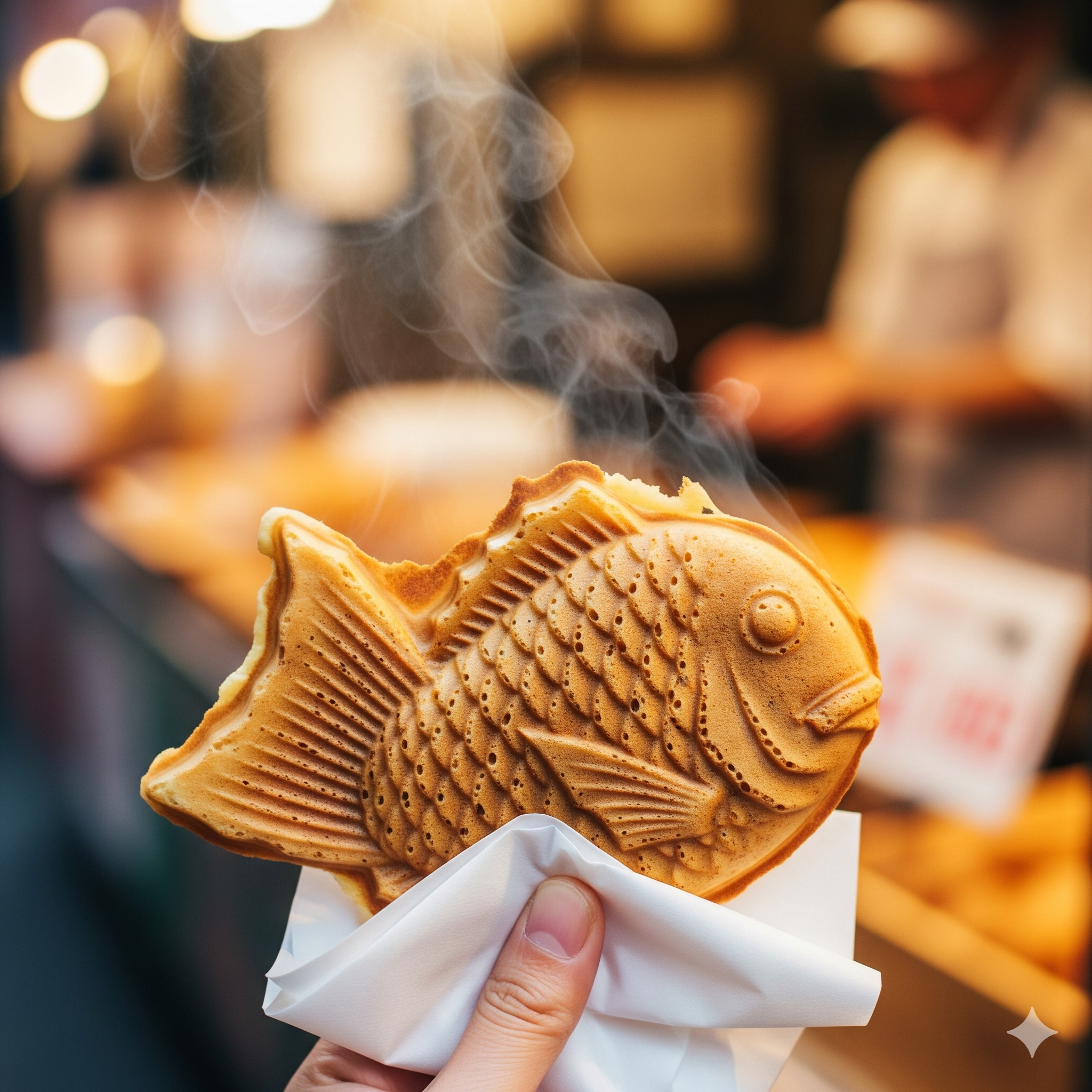
When exploring the vibrant streets of Japan, one treat consistently catches the eye and tantalizes the taste buds: Taiyaki (たい焼き). This delightful, fish-shaped cake, with its crispy exterior and warm, often sweet, interior, is a beloved street food snack that embodies a perfect blend of simplicity, tradition, and heartwarming flavor. More than just a dessert, Taiyaki is a cultural icon, evoking nostalgic memories for many Japanese and captivating the curiosity of international visitors.
This article invites you on a culinary journey to uncover the charm of Taiyaki, from its intriguing origins and various fillings to its preparation and enduring popularity. Get ready to fall in love with Japan’s most adorable confection!
What is Taiyaki? The Fishy Facts
At first glance, Taiyaki is unmistakable: a golden-brown, fish-shaped cake. But this isn’t just any fish; it’s specifically molded to resemble a tai (sea bream), a fish highly prized in Japan and considered a symbol of good luck and prosperity. This symbolic shape is a key part of its appeal.
The cake itself is made from a simple batter, similar to pancake or waffle batter, poured into special fish-shaped molds. Once cooked, it boasts a delightful contrast: a slightly crisp, golden-brown crust on the outside, and a soft, fluffy interior that encases a generous filling.
A Bite into History: The Origins of Taiyaki
The story of Taiyaki begins in Tokyo during the Meiji era (1868-1912). It’s believed to have originated from a similar round cake called Imagawayaki (今川焼き), which dates back to the Edo period. Imagawayaki are simple round griddled cakes typically filled with anko (sweet red bean paste).
Legend has it that a street vendor, struggling to sell his Imagawayaki, decided to make his cakes more appealing by shaping them like the auspicious tai fish. The novelty and symbolism proved to be a stroke of genius, and Taiyaki quickly soared in popularity, becoming a beloved snack that has been enjoyed for over a century. The first Taiyaki shop, Naniwaya Sōhonten in Azabu-Jūban, Tokyo, opened in 1909 and is still considered a legendary spot for authentic Taiyaki today.
The Heart of Taiyaki: Delicious Fillings
While the fish shape is iconic, the true magic of Taiyaki often lies within its warm, comforting filling. Traditionally, the most popular and classic filling is:
- Anko (Sweet Red Bean Paste): This is the undisputed king of Taiyaki fillings. Made from azuki beans, sweetened and cooked down to a smooth or chunky paste, anko offers a subtle, earthy sweetness that perfectly complements the plain cake batter.
However, as Taiyaki has evolved and adapted to modern tastes, a delightful array of other fillings has emerged:
- Custard Cream: A rich, vanilla-flavored custard that provides a creamy, indulgent alternative to anko.
- Chocolate: Often melted chocolate or a chocolate cream, popular especially with younger generations.
- Matcha Cream: A delicate, earthy cream infused with green tea powder.
- Sweet Potato: A seasonal favorite, particularly in autumn, offering a naturally sweet and comforting flavor.
- Savory Fillings: While less common, some vendors offer savory Taiyaki with fillings like cheese, curry, or even okonomiyaki-style ingredients, blurring the lines between snack and a light meal.
How Taiyaki is Made: A Glimpse into the Process
Making Taiyaki is an art form, though the basic process is straightforward. It requires special cast-iron molds, typically hinged and shaped like a tai.
- Batter Preparation: A simple batter, usually made from flour, eggs, sugar, and baking soda, is prepared to a consistency slightly thicker than pancake batter.
- Greasing and Pouring: The heated molds are lightly greased. A small amount of batter is poured into one side of the fish mold.
- Adding the Filling: A generous dollop of the chosen filling (most commonly anko) is carefully placed on top of the batter.
- Closing the Mold: More batter is poured over the filling, and the other half of the mold is closed, often completely encasing the filling and joining the two halves of the fish.
- Cooking: The mold is then cooked over a flame or on an electric griddle, often flipped periodically, until both sides of the Taiyaki are golden brown and crispy, and the filling is hot.
- Serving: The freshly cooked Taiyaki is then carefully removed from the mold and served hot, often in a paper sleeve to prevent burning fingers.
There are two main styles of Taiyaki cooking:
- “Natural” or “Single-Mold” (一本焼き – ippon-yaki): Each fish is cooked in its own separate mold, often resulting in a slightly crispier edge and a more individually crafted feel.
- “Batch-Cooked” (連式 – ren-shiki): Multiple fish shapes are connected within a single large griddle, allowing for faster production.
Taiyaki’s Enduring Popularity and Cultural Impact
Taiyaki is more than just a sweet treat; it’s a piece of everyday Japanese culture. It’s a staple at street festivals (matsuri), found in bustling shopping districts, and often sold from small, charming street stalls. Its affordable price point and comforting taste make it accessible and beloved by people of all ages.
The charming fish shape has also lent itself to various pop culture references, from anime and manga to video games. Its iconic status has even led to variations like “Croissant Taiyaki,” which uses a flaky croissant-dough exterior, and “Taiyaki Ice Cream,” where the fish-shaped cone is filled with soft-serve ice cream.
Whether you’re enjoying a classic anko-filled Taiyaki on a chilly day or trying a modern, experimental flavor, this adorable fish-shaped cake offers a taste of Japanese warmth and tradition that is truly unforgettable.
Frequently Asked Questions
Is Taiyaki a dessert or a snack?
Taiyaki is typically considered a snack, often enjoyed on the go or as a light treat. However, with its sweet fillings, it can certainly satisfy a dessert craving.
Is Taiyaki served hot or cold?
Taiyaki is almost always served hot and fresh off the griddle. The warmth of the cake and filling is a key part of its appeal.
Are Taiyaki gluten-free?
Traditionally, Taiyaki batter is made with wheat flour, so it is not gluten-free. Some specialty shops might offer gluten-free versions, but they are not common.
What does Taiyaki taste like?
The cake itself has a flavor similar to a pancake or waffle, slightly sweet and mild. The dominant flavor comes from the filling, with anko offering an earthy sweetness and custard providing a rich, creamy taste. The contrast of the crispy exterior and soft interior is also a significant part of the experience.
Can I find Taiyaki outside of Japan?
Yes! Due to its growing popularity, Taiyaki shops can now be found in many major cities around the world, particularly in areas with a strong Asian food scene.
Leave a Reply