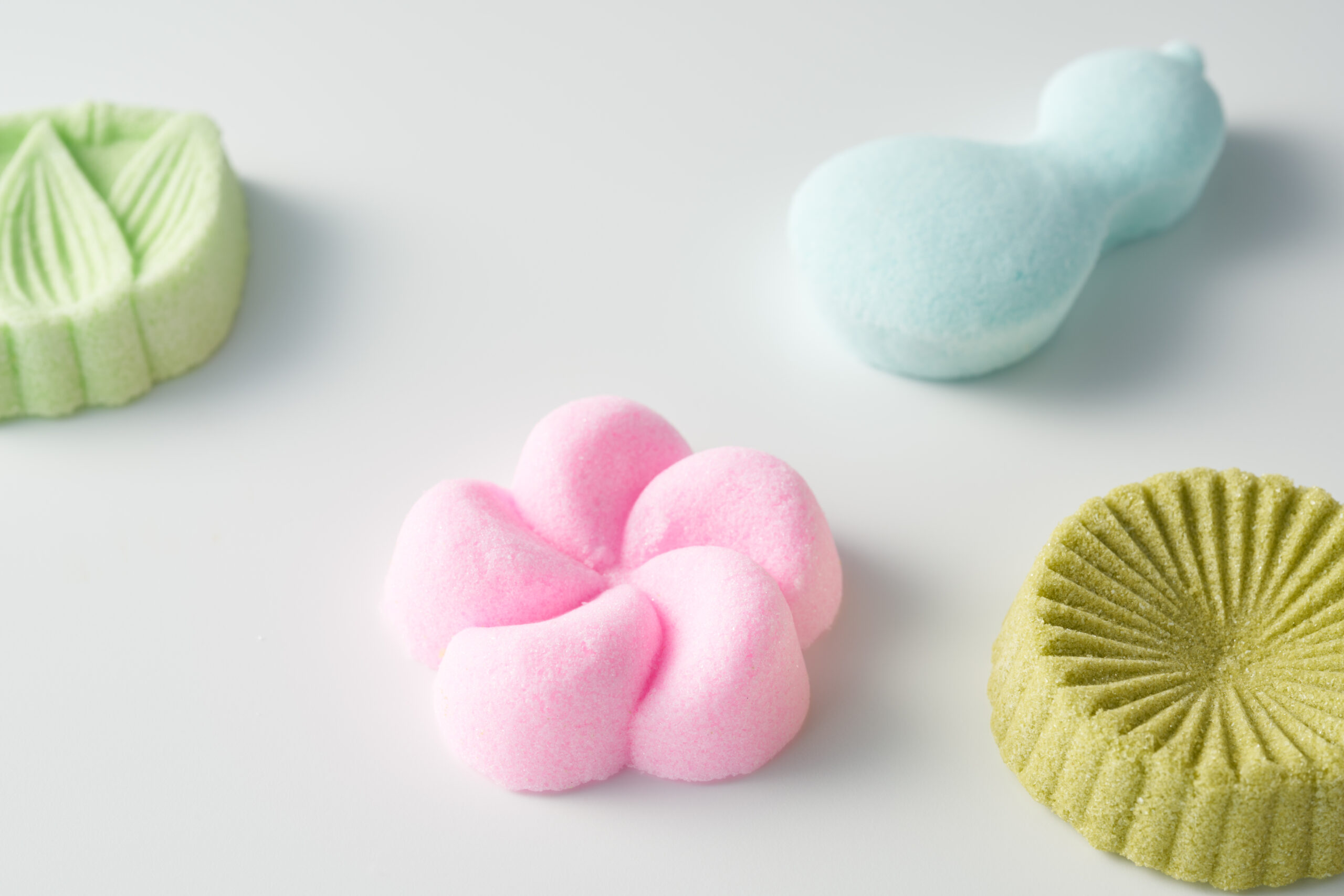
Introduction – Japan’s Hidden Sweet Treasure
Among all the ingredients in traditional Japanese sweets, Wasanbon sugar (和三盆糖) is the most enchanting. Known for its delicate texture and elegant sweetness, this rare sugar instantly melts in your mouth, leaving behind a refined aftertaste. It is not just sugar—it is a luxury ingredient that embodies Japanese craftsmanship.
What is Wasanbon Sugar?
Wasanbon is a high-quality, hand-refined sugar produced mainly in Shikoku (Tokushima and Kagawa prefectures). Unlike ordinary white sugar, wasanbon is made from a special type of sugarcane called chikuto, cultivated only in this region.
The production process is meticulous and artisanal, resulting in a sugar that is pale golden, aromatic, and unbelievably smooth.
The Traditional Crafting Process
Wasanbon takes nearly one week of careful refinement:
- Harvesting chikuto sugarcane in winter.
- Boiling and clarifying the juice, removing impurities.
- Pressing and kneading repeatedly to refine the crystals.
- Drying naturally under sunlight, preserving delicate flavor.
This slow, labor-intensive process is what gives wasanbon its signature melt-in-your-mouth texture.
Why Wasanbon is Special
- Flavor: Subtle sweetness without heaviness.
- Texture: Powdery fine crystals dissolve instantly.
- Aroma: Gentle, floral fragrance.
- Cultural Value: Used in wagashi for tea ceremonies, where refinement is essential.
Wagashi Made with Wasanbon
- Higashi (干菓子): Dry sweets pressed into seasonal shapes.
- Nerikiri (練り切り): Artistic wagashi that rely on delicate sweetness.
- Rakugan (落雁): Traditional molded sweets served during festivals.
These confections highlight wasanbon’s ability to deliver purity and elegance in every bite.
Modern Uses Beyond Wagashi
Today, wasanbon is also appearing in:
- High-end chocolates
- Luxury ice creams
- Specialty coffee and tea pairings
Its reputation has expanded from tea houses in Kyoto to gourmet kitchens worldwide.
Health Aspects of Wasanbon
While still sugar, wasanbon is:
- Less processed than industrial sugars.
- Contains trace minerals from the chikuto cane.
- Easier on the palate due to its mild sweetness.
For health-conscious dessert lovers, it offers a more natural and balanced indulgence.
Where to Buy Wasanbon Sugar
- In Japan: Specialty sweet shops in Kyoto, Tokushima, and Kagawa.
- Overseas: Online platforms such as Amazon, Rakuten Global, and Japanese confectionery brands like Minamoto Kitchoan.
- Gift Boxes: Premium wagashi sets often highlight wasanbon-made sweets.
Conclusion – The Luxury of Subtlety
Wasanbon sugar is more than an ingredient—it is a symbol of Japanese refinement, patience, and artistry. Its instant melt and gentle flavor turn every wagashi into a magical experience. Next time you enjoy a piece of Japanese confectionery, notice the difference—if it feels delicate, smooth, and unforgettable, it may be the secret of wasanbon.
FAQ about Wasanbon Sugar
Q1. Why is wasanbon more expensive than regular sugar?
A. Because it is made from rare chikuto cane, refined by hand, and produced only in limited regions of Japan, making it a luxury ingredient.
Q2. Does wasanbon taste sweeter than normal sugar?
A. No, it is actually less sharp and more delicate. Its subtlety is what makes it refined and unique.
Q3. Can wasanbon be used in everyday cooking?
A. Yes, but due to its cost, it is usually reserved for wagashi, tea ceremonies, or luxury desserts.
Q4. Is wasanbon healthier than white sugar?
A. While still sugar, it is less processed and contains trace minerals, but it should still be enjoyed in moderation.
Q5. Where can I buy wasanbon outside Japan?
A. Online stores such as Amazon, Bokksu, or Rakuten Global, as well as Japanese specialty confectionery shops abroad.
Leave a Reply