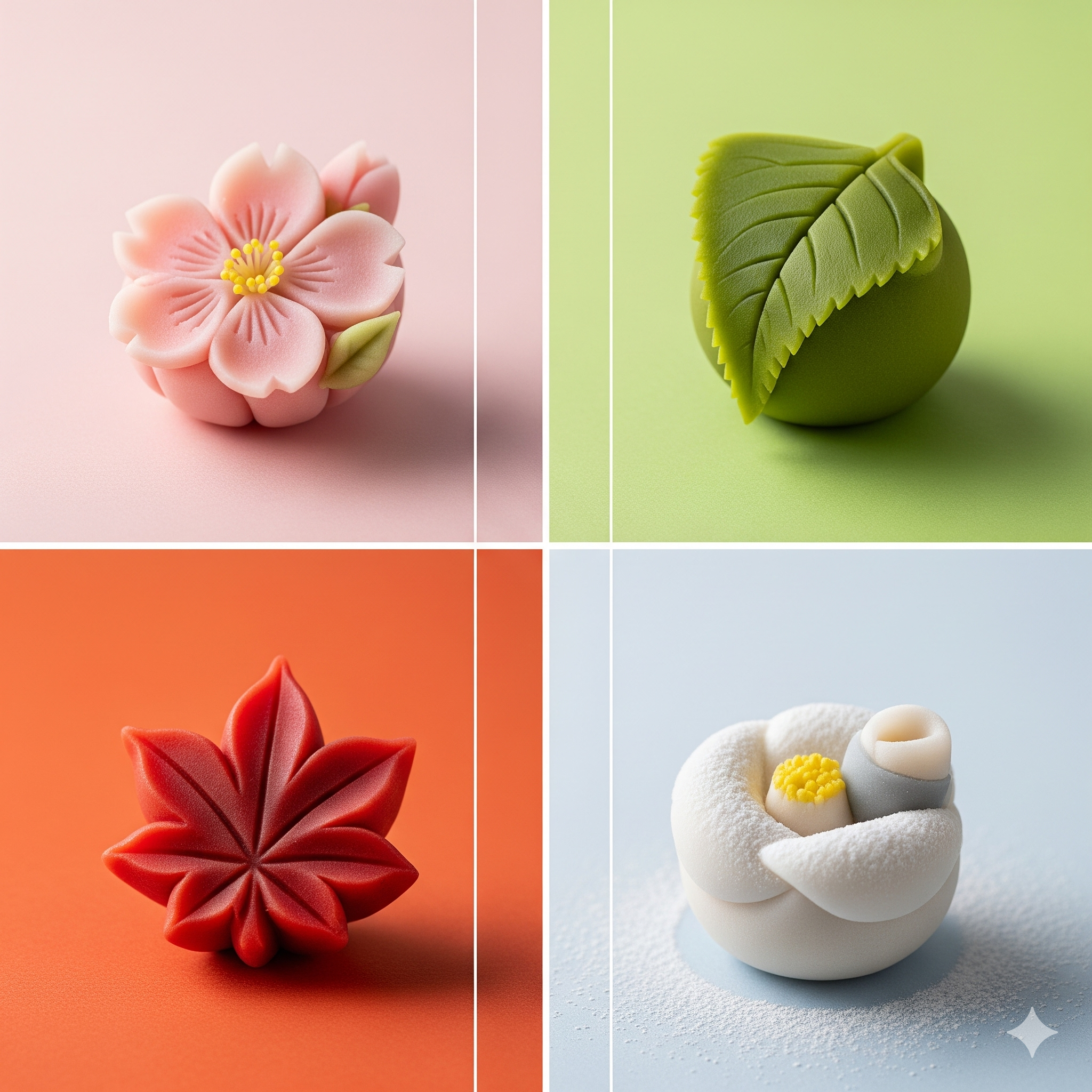
Introduction: A Calendar You Can Eat
In Japan, the year is not just marked by a calendar on the wall, but by the subtle shifts in nature. From the first blush of cherry blossoms to the quiet fall of snow, this reverence for the changing seasons, or kisetsu (季節), is woven into every aspect of life, including its sweets. Seasonal Wagashi are more than just confections; they are miniature works of art that capture the fleeting beauty of each season in a single, delicious moment.
This visual guide will take you on a journey through the year, exploring how the ingredients, colors, and shapes of Wagashi change in harmony with nature. Get ready to experience the four seasons of Japan in a way you never have before: through your taste buds.
Spring: The Celebration of New Beginnings
Spring, or haru (春), is a season of renewal and soft beauty. The Wagashi of this season are light, delicate, and often feature the colors of new life.
- Key Colors: Soft pinks, pale greens, and whites, reflecting cherry blossoms and new growth.
- Common Shapes: Sakura (cherry blossoms), butterflies, and budding flowers.
- Star Ingredients:
- Sakura: Cherry blossom petals are often used to flavor and color mochi and nerikiri.
- Ichigo: Fresh strawberries, used in treats like Ichigo Daifuku (a mochi filled with strawberry and anko).
- Yomogi: Japanese mugwort, which gives a vibrant green color and a subtle grassy flavor to mochi and dango.
Popular Spring Wagashi:
- Sakuramochi: A classic spring sweet consisting of a pink-colored mochi filled with anko and wrapped in a salted cherry blossom leaf.
- Hanami Dango: Three-colored dango on a skewer (pink, white, and green), enjoyed during cherry blossom viewing parties.
Summer: The Essence of Freshness
Summer, or natsu (夏), is a time of lush greenery, vibrant colors, and a desire for refreshing, cooling treats. Summer Wagashi are often designed to evoke a feeling of coolness, even on the warmest days.
- Key Colors: Vibrant greens of new leaves, translucent whites, and the colors of fresh fruit.
- Common Shapes: Hydrangea petals, glistening raindrops, lotus flowers, and fish.
- Star Ingredients:
- Matcha: The rich, earthy flavor of green tea is a staple of summer.
- Mizu Yokan: A lighter, more watery version of Yokan, perfect for hot weather.
- Fresh Fruits: Plums, peaches, and berries are often incorporated.
Popular Summer Wagashi:
- Mizu Manju: A clear, gelatinous dumpling with a filling of anko, often chilled to provide a cooling sensation.
- Kuzukiri: A translucent jelly noodle made from kudzu starch, served chilled with a sweet syrup.
Autumn: The Harvest of Richness and Color
Autumn, or aki (秋), is a season of abundance, fiery colors, and a comforting sense of warmth. The Wagashi of this season are richer, heartier, and reflect the colors of the changing leaves.
- Key Colors: Deep reds, burnt oranges, golds, and browns.
- Common Shapes: Maple leaves, chestnuts, persimmons, and chrysanthemums.
- Star Ingredients:
- Kuri: Chestnuts, either whole or in paste form (kurian), are a quintessential autumn ingredient.
- Satsuma-imo: Sweet potatoes, which add a rich, earthy flavor and creamy texture.
- Adzuki Beans: Used in their chunkiest form to create a more rustic sweetness.
Popular Autumn Wagashi:
- Kuri Kinton: A simple, sweet paste of mashed chestnuts and sugar, often shaped to resemble a chestnut.
- Momiji Manju: A leaf-shaped steamed cake, often filled with anko, a popular souvenir from Hiroshima.
Winter: The Simplicity of Serenity
Winter, or fuyu (冬), is a time of quiet elegance and serene beauty. Winter Wagashi often use simple, classic shapes and ingredients to evoke a feeling of warmth and tranquility.
- Key Colors: Pure whites, muted grays, and deep reds.
- Common Shapes: Camellia flowers, snowflakes, pine trees, and snow-capped mountains.
- Star Ingredients:
- Yuzu: A fragrant Japanese citrus fruit, providing a refreshing and slightly tart flavor.
- Mochi: The sticky rice cake is a staple, symbolizing warmth and good luck.
- Nuts: Walnuts and other nuts are often used to add richness.
Popular Winter Wagashi:
- Hanabiramochi: A flat, white mochi filled with red bean paste and a sweet burdock root, traditionally eaten at the New Year.
- Tsubaki (Camellia): Nerikiri shaped like a camellia flower, a common sight in winter.
Frequently Asked Questions about Seasonal Wagashi
Why are Wagashi so seasonal?
The seasonality of Wagashi is deeply rooted in Japanese culture and its respect for nature. It’s a way to appreciate the passing of time and the beauty of each distinct season.
Are seasonal Wagashi only available during that season?
Yes, most seasonal Wagashi (namagashi) are made fresh and are only available during the specific season they represent. This makes them a special and fleeting treat.
Do all Wagashi have seasonal themes?
No, some Wagashi like Dorayaki or Manju are available year-round, as their shape and ingredients do not directly reference a specific season.
Can I make seasonal Wagashi at home?
Yes! Many seasonal Wagashi, especially Nerikiri, are popular for home cooking. You can use natural food colorings and simple molds to create your own seasonal sweets.
Conclusion: A Sweet Connection to Nature
From the hopeful pinks of spring to the warm browns of autumn, Seasonal Wagashi are a beautiful reminder to slow down and appreciate the simple wonders of the natural world. Each piece is a sweet, edible poem to the season it represents. We hope this guide has inspired you to seek out these unique creations and connect with the heart of Japanese culture, one season at a time.
Leave a Reply