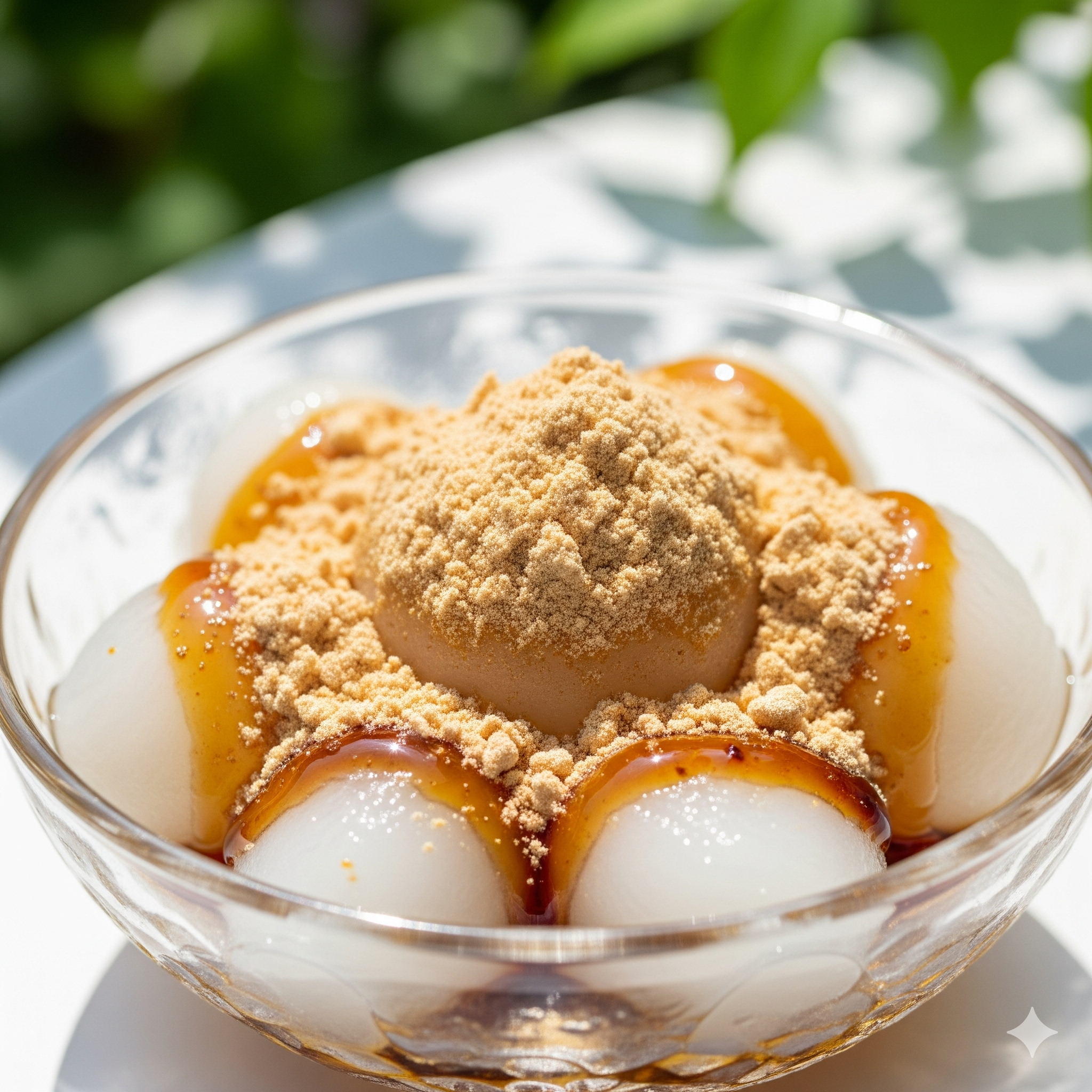
In the diverse and captivating world of Japanese sweets, some confections are celebrated for their intricate forms, while others are cherished for their simple, comforting textures. Warabi Mochi (わらび餅) belongs to the latter. A classic Japanese treat with a history that spans centuries, this dessert stands out for its unique, jelly-like consistency and its refreshing quality, making it a quintessential symbol of a Japanese summer. Often mistaken for its more famous cousin, mochi, Warabi Mochi offers an entirely different, and equally enchanting, culinary experience.
This article delves into the fascinating world of Warabi Mochi, exploring its unique ingredients, its simple yet satisfying preparation, and why this cooling delicacy has captured the hearts of generations.
What is Warabi Mochi? A Unique Textural Experience
Warabi Mochi is a confection made from warabi (bracken fern) starch, giving it a soft, jelly-like, and slightly translucent appearance. Unlike traditional mochi, which is made from pounded glutinous rice and has a chewy, elastic texture, Warabi Mochi has a delicate, melt-in-your-mouth quality. The texture is often described as jiggly and soft, almost like a firm jelly or a soft gummy.
The most traditional way to enjoy Warabi Mochi is chilled and served with a generous dusting of roasted soybean flour (kinako) and a drizzle of rich brown sugar syrup (kuromitsu). The combination of the cool, neutral jelly with the nutty kinako and the deep sweetness of the kuromitsu creates a perfect symphony of flavors and textures.
The Core Ingredient: The Elusive Warabi Starch
The defining ingredient of Warabi Mochi is the starch extracted from the roots of the bracken fern. This traditional process is incredibly labor-intensive and yields very little starch, making authentic hon-warabi-ko (pure bracken starch) one of the most expensive and rare food ingredients in Japan. A small amount of pure starch is often priced higher than some luxury foods, and a taste of true Warabi Mochi is considered a delicacy.
Due to the scarcity and high cost of authentic bracken starch, most Warabi Mochi sold today, particularly at supermarkets and street stalls, are made using a blend of more accessible starches, such as sweet potato or tapioca starch. While these substitutes do an excellent job of replicating the desired texture, true connoisseurs can discern the subtle, refined qualities of the pure warabi starch.
The Simple Process of Making Warabi Mochi
Making Warabi Mochi is a straightforward process that transforms a few simple ingredients into a delightful treat. The core components are the starch, sugar, and water.
- Mixing: The starch and sugar are dissolved in cold water in a pot.
- Heating: The mixture is then heated slowly over medium heat, stirred continuously with a spatula or wooden spoon. At first, the mixture is a milky liquid.
- Thickening: As it heats, the mixture begins to thicken and turn translucent. This requires constant stirring to prevent clumps from forming. The goal is to create a perfectly smooth, glossy, and jelly-like dough.
- Cooling: Once the desired consistency is achieved, the hot jelly is poured onto a tray and spread into an even layer. It is then chilled, allowing it to firm up.
- Cutting and Coating: Once fully cooled and firm, the jelly is cut into bite-sized cubes or free-form shapes. These pieces are then generously coated in kinako and are ready to be served.
The Perfect Summer Treat
Warabi Mochi is a staple during Japan’s hot and humid summers. Its association with the season is not a coincidence; its cool temperature and light, refreshing quality provide welcome relief from the heat. You can often find street vendors selling freshly made Warabi Mochi at summer festivals (matsuri) or in shopping districts, serving it in small cups with a side of kuromitsu. Its simple preparation and portability make it an ideal snack for a warm day.
The Classic Pairings: Kinako and Kuromitsu
The flavor of Warabi Mochi itself is very neutral. The true taste comes from its traditional toppings, which are essential to the experience.
Kinako (Roasted Soybean Flour)
Kinako is made from finely ground roasted soybeans. It has a nutty, slightly sweet, and toasty flavor that is immediately comforting. The powder is generously used to coat the Warabi Mochi pieces, not only for flavor but also to prevent the slippery, jiggly pieces from sticking to each other.
Kuromitsu (Brown Sugar Syrup)
Kuromitsu is a rich, dark syrup made from unrefined brown sugar. It has a flavor profile similar to molasses or dark caramel, with a deep, complex sweetness. A drizzle of this syrup adds a final layer of luxurious, warm flavor that beautifully contrasts with the cooling sensation of the mochi.
Where to Find and Enjoy Authentic Warabi Mochi
For the most authentic experience, seek out a traditional wagashi-ya (Japanese confectionery shop), especially in historic cities like Kyoto, where the art of Warabi Mochi making is highly revered. During summer, it’s also a common sight at street stalls, offering a fresh taste of local flavor. For those outside of Japan, some Japanese supermarkets and specialty food stores carry pre-packaged Warabi Mochi kits or chilled, ready-to-eat versions.
Frequently Asked Questions
Is Warabi Mochi the same as regular mochi?
No, they are different. Regular mochi is made from glutinous rice and is very chewy. Warabi Mochi is made from bracken starch and has a soft, delicate, jelly-like texture that melts in the mouth.
What does Warabi Mochi taste like?
Warabi Mochi on its own has a very subtle, almost neutral flavor. The taste comes primarily from the toppings. The kinako provides a nutty, roasted flavor, while the kuromitsu adds a deep, caramel-like sweetness.
Is Warabi Mochi vegan and gluten-free?
Yes, traditionally Warabi Mochi is both vegan and gluten-free. It is made from plant-based starch, sugar, and water. The kinako and kuromitsu are also plant-based, making it a suitable dessert for those with these dietary needs.
Is it easy to make Warabi Mochi at home?
Yes, it is relatively simple to make Warabi Mochi at home with the right ingredients. Packaged Warabi Mochi starch blends are available in many Japanese grocery stores, and the process only requires heating and stirring.
Leave a Reply