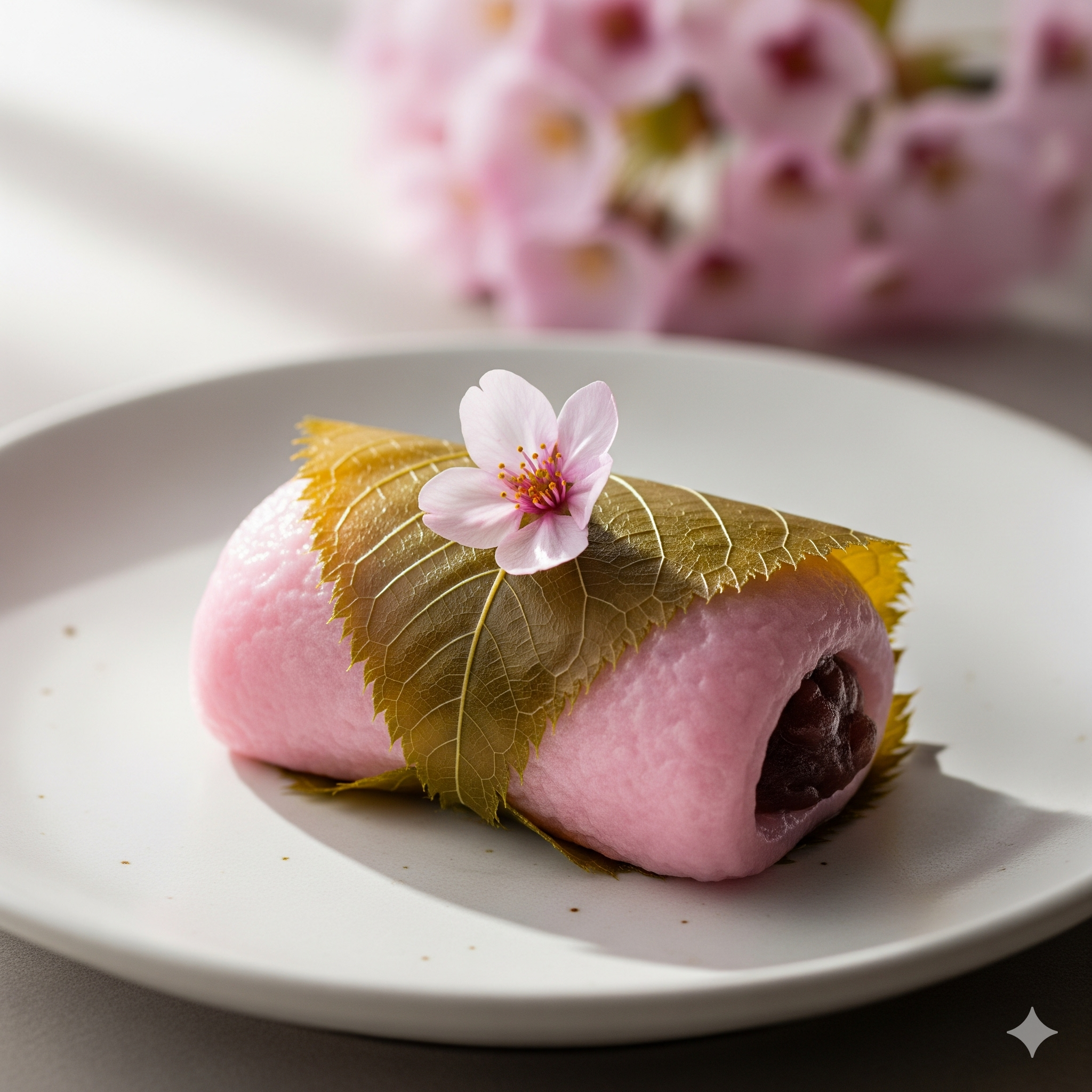
In Japan, the arrival of spring is not only marked by the sight of delicate cherry blossoms, but also by the appearance of a special confection created to celebrate them: Sakura Mochi (桜餅). This beautiful pink sweet, wrapped in a pickled cherry blossom leaf, is a seasonal wagashi (traditional Japanese sweet) that captures the very essence of the season. More than just a dessert, Sakura Mochi is a cultural touchstone, a symbol of new beginnings and the cherished tradition of hanami (cherry blossom viewing).
This article will guide you through the charming world of Sakura Mochi, exploring its two distinct regional styles, its unique ingredients, and its deep-rooted connection to the most celebrated season in Japan.
What is Sakura Mochi? The Essence of Spring
Sakura Mochi is a sweet, sticky rice cake filled with anko (sweet red bean paste) and wrapped in a salty, pickled cherry blossom leaf. Its delicate pink color and fresh fragrance immediately evoke the feeling of spring. The experience of eating it is a delightful interplay of contrasts: the soft, chewy texture of the rice cake and the grainy sweetness of the anko are perfectly balanced by the salty and slightly astringent flavor of the edible leaf. It is a sweet that engages multiple senses, making it a true culinary celebration of the season.
The Two Sides of Sakura Mochi: Kanto vs. Kansai
While the name and purpose are the same, Sakura Mochi has two distinct regional styles that are a source of friendly debate among connoisseurs. The difference lies in the rice cake itself.
The Kanto Style (Chōmeiji)
In the Kantō region, which includes Tokyo, Sakura Mochi is known as Chōmeiji Sakura Mochi. It is made by forming a thin, crepe-like pancake from wheat flour, which is then colored pink and folded around the anko filling. This style is characterized by its smooth, delicate texture and its elegant, folded appearance, reminiscent of a scroll. The name comes from Chōmeiji Temple in Sumida, Tokyo, where this style originated.
The Kansai Style (Dōmyōji)
In the Kansai region, which includes Kyoto and Osaka, the style is known as Dōmyōji Sakura Mochi. This version is made from dōmyōji-ko, a coarse glutinous rice flour that is steamed and then formed into a plump, round dumpling. The texture is noticeably chewier and contains the distinct texture of the rice grains. Its more substantial, dumpling-like form is a satisfying contrast to the lighter Kantō style. The name Dōmyōji also comes from a temple, Dōmyōji Temple in Osaka, where this type of flour was originally made.
The Core Ingredients: A Symphony of Flavors
The beauty of Sakura Mochi lies in the simplicity and perfection of its ingredients, each playing a crucial role in the final flavor profile.
The Rice Cake
Whether it’s the smooth wheat flour crepe of Kantō or the chewy, grainy dōmyōji-ko of Kansai, the rice cake serves as the sweet, soft foundation of the confection. It is traditionally dyed a pale pink, a symbolic representation of the fleeting and beautiful cherry blossom petals.
The Cherry Blossom Leaf
The leaf is perhaps the most iconic part of Sakura Mochi. It comes from the Ōshima zakura cherry tree, a variety known for its large leaves. These leaves are carefully pickled in salt and brine (shiozuke). This process not only preserves them but also infuses them with a unique salty and fragrant aroma. While some people choose to remove the leaf, it is meant to be eaten with the mochi, as its salty flavor provides a perfect counterbalance to the sweetness of the rice cake and anko.
The Anko Filling
The heart of Sakura Mochi is its sweet red bean paste. It is almost always a smooth paste (koshian), which provides a creamy and delicate texture that harmonizes with the soft rice cake. The earthy, sweet flavor of the anko is a timeless pairing with the salty-floral notes of the leaf.
A Seasonal and Cultural Symbol
Sakura Mochi is a treat that marks a specific time of year and is deeply intertwined with Japanese cultural events.
- Hinamatsuri (Girls’ Day): On March 3rd, this sweet is traditionally offered as part of the celebratory feast for the festival, which prays for the health and happiness of young girls.
- Hanami (Cherry Blossom Viewing): During the cherry blossom season, families and friends gather under the blooming trees for picnics. Sakura Mochi is a staple of these gatherings, allowing people to literally “taste” the season and the natural beauty that surrounds them.
The act of enjoying Sakura Mochi is a quiet celebration of the fleeting nature of the cherry blossoms themselves—a beautiful moment to be savored before it passes.
Where to Find and Enjoy Sakura Mochi
As a seasonal treat, Sakura Mochi is available for a limited time, typically from late February to mid-April, depending on the cherry blossom bloom. To experience the most authentic and freshly made Sakura Mochi, visit a traditional wagashi-ya (Japanese confectionery shop). High-end department stores also feature exquisite versions from famous artisans. During the season, you can also find pre-packaged versions in supermarkets and convenience stores, making this sweet a widely accessible taste of spring.
Frequently Asked Questions
Why is Sakura Mochi wrapped in a leaf?
The pickled cherry blossom leaf adds a salty, slightly tangy, and fragrant flavor that perfectly balances the sweetness of the mochi and the red bean paste. It also serves as a beautiful and iconic visual representation of the cherry blossom season.
Is the leaf edible?
Yes, the pickled cherry blossom leaf is edible and is intended to be eaten along with the mochi. It is a key part of the flavor experience.
What does Sakura Mochi taste like?
It is a mix of sweet, salty, and subtly floral flavors. The rice cake and anko provide a comforting sweetness, while the leaf adds a savory, salty kick and a delicate cherry blossom aroma that is unique to the treat.
Can I find Sakura Mochi year-round?
No, Sakura Mochi is a seasonal confection. Its availability is limited to the spring season, typically from late February to mid-April, as its purpose is to celebrate the cherry blossom bloom.
What’s the difference between Sakura Mochi and Hanami Dango?
While both are associated with hanami, they are different sweets. Sakura Mochi is a single, leaf-wrapped cake with a filling. Hanami Dango consists of three small dumplings (in pink, white, and green) on a skewer, representing the colors of spring.
Leave a Reply