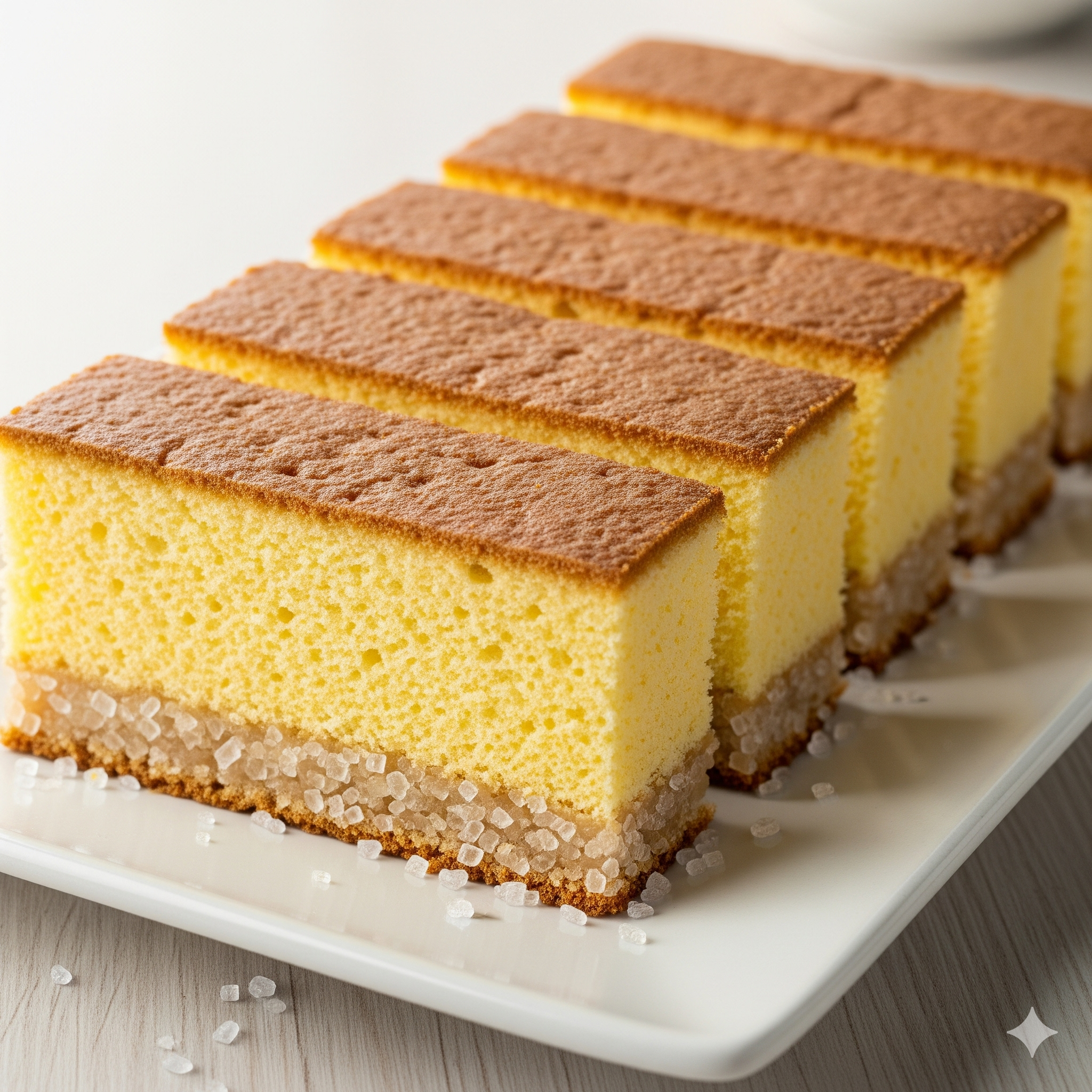
In the culinary tapestry of Japan, some traditions are purely indigenous, while others are the result of beautiful and unexpected fusions. Kasutera (カステラ), a cherished Japanese sponge cake, belongs to the latter. With a history stretching back over 400 years, this unassuming cake is a testament to the cultural exchange between Japan and Portugal, a sweet relic of the age of exploration that has been perfected by Japanese artisans into a beloved classic.
This article invites you to journey into the rich history and unique flavor of Kasutera, exploring its Portuguese origins, its simple yet masterful preparation, and its iconic status as a symbol of the historic city of Nagasaki.
What is Kasutera? A Sweet and Simple Delight
Kasutera is a type of sponge cake characterized by its moist, dense, and slightly springy texture. It is a deceptively simple confection, made from just four core ingredients: flour, eggs, sugar, and a special type of starch syrup (mizuame) or honey. Unlike Western sponge cakes that rely on butter or oil for moisture, Kasutera’s unique texture comes from the careful whisking of eggs and the addition of honey or mizuame, which also contributes to its rich, golden color and deep flavor.
A hallmark of authentic Kasutera is the layer of coarse, caramelized sugar crystals that often form on the bottom crust, providing a pleasant crunch that contrasts with the cake’s softness.
From Portugal to Japan: The Journey of a Cake
The story of Kasutera begins in the 16th century, a time when Portuguese merchants and missionaries first arrived in Japan. They established a trading post in Nagasaki, which became the sole port open to foreign commerce during Japan’s period of national isolation (sakoku).
Among the goods and cultural ideas they brought was a simple sponge cake, known in Portuguese as Pão de Castela, meaning “bread from Castile” (a historic kingdom in Spain). The Japanese, with their deep respect for craftsmanship and a desire to adapt foreign concepts to their own refined sensibilities, embraced this recipe.
Over centuries, Japanese bakers meticulously perfected the recipe, adjusting the sweetness and adding ingredients like honey to create a distinctively Japanese version. The name Kasutera is the Japanese phonetic spelling of Castela, a sweet reminder of its European origins.
The Art of Making Kasutera
Creating a perfect Kasutera is a process that requires patience and precision. While the ingredients are few, the technique is what sets a good Kasutera apart.
- Beating the Eggs: The process begins with vigorously beating the eggs and sugar for an extended period. This is crucial for incorporating air into the batter and achieving the cake’s dense, springy texture without the use of chemical leavening agents.
- Mixing the Batter: The flour and honey are then gently folded into the egg mixture.
- Traditional Baking: The batter is poured into a special square or rectangular wooden mold, which helps regulate the temperature and moisture during baking. The cake is baked at a low temperature for a long duration, ensuring it cooks evenly and retains its moisture.
- Aging: After baking, the cake is carefully wrapped and allowed to “age” for a day or two. This crucial step allows the moisture to distribute evenly throughout the cake, softening the texture and deepening the flavors.
Kasutera’s Cultural Significance
Kasutera holds a special place in Japanese culture, particularly in the city of its origin.
A Nagasaki Icon
Kasutera is unequivocally the most famous culinary product of Nagasaki. It is not just a cake but a symbol of the city’s rich history as a gateway for foreign culture. Visitors to Nagasaki flock to historic Kasutera shops to purchase the famous rectangular cakes as an omiyage (souvenir) for friends and family.
A Gift for All Occasions
Its elegant simplicity, beautiful golden color, and long shelf life make it a perfect gift for all occasions. It is a common gesture of hospitality and appreciation, often given as a gift to celebrate a special event or as a token of thanks. Unlike many traditional wagashi, which are fresh and delicate, Kasutera’s durability and timeless appeal have allowed it to transcend fads and remain a classic.
Varieties of Kasutera
While the classic honey-flavored Kasutera remains the standard, bakers have introduced a variety of modern flavors to suit contemporary tastes. Some of the most popular variations include:
- Matcha Kasutera: Infused with green tea powder, it adds an earthy and slightly bitter note that pairs beautifully with the cake’s sweetness.
- Chocolate Kasutera: A rich, cocoa-infused version.
- Brown Sugar Kasutera: Made with brown sugar for a deeper, more caramel-like flavor.
Where to Find and Enjoy Kasutera
To taste authentic Kasutera, a visit to Nagasaki is a must. Famed shops like Fukusaya and Shokado have been perfecting their recipes for centuries. Outside of Nagasaki, Kasutera can be found in department store food halls, train station shops, and specialty Japanese markets throughout the country.
When serving, Kasutera is often cut into neat, rectangular slices. It is best enjoyed with a cup of hot green tea or coffee, as the warm beverage provides a lovely counterpoint to the cake’s rich, moist texture.
Frequently Asked Questions
What’s the difference between Kasutera and regular sponge cake?
Kasutera is denser and moister than a typical Western sponge cake. Its unique texture comes from the use of honey or mizuame and the careful beating of eggs, rather than butter or oil. It also features a distinct caramelized sugar layer at the bottom.
Why is Kasutera a Nagasaki specialty?
Kasutera is a Nagasaki specialty because the city was the only port in Japan open to foreign trade for over 200 years. The Portuguese introduced the original recipe to Nagasaki, and it was there that Japanese artisans refined it into the cake we know today.
Does Kasutera contain gluten?
Yes, Kasutera is made from wheat flour and therefore contains gluten.
What is the best way to store Kasutera?
Kasutera is best stored in an airtight container at room temperature. It does not require refrigeration. It is often said that the cake tastes best a day or two after it is made, once the moisture has had time to settle.
Leave a Reply